



A glaring structural imbalance defines Nigeria’s performance in the mid-year FIFA 2026 transfer window, where local football purely acts as a raw export market while reinvesting virtually nothing back into incoming talent.
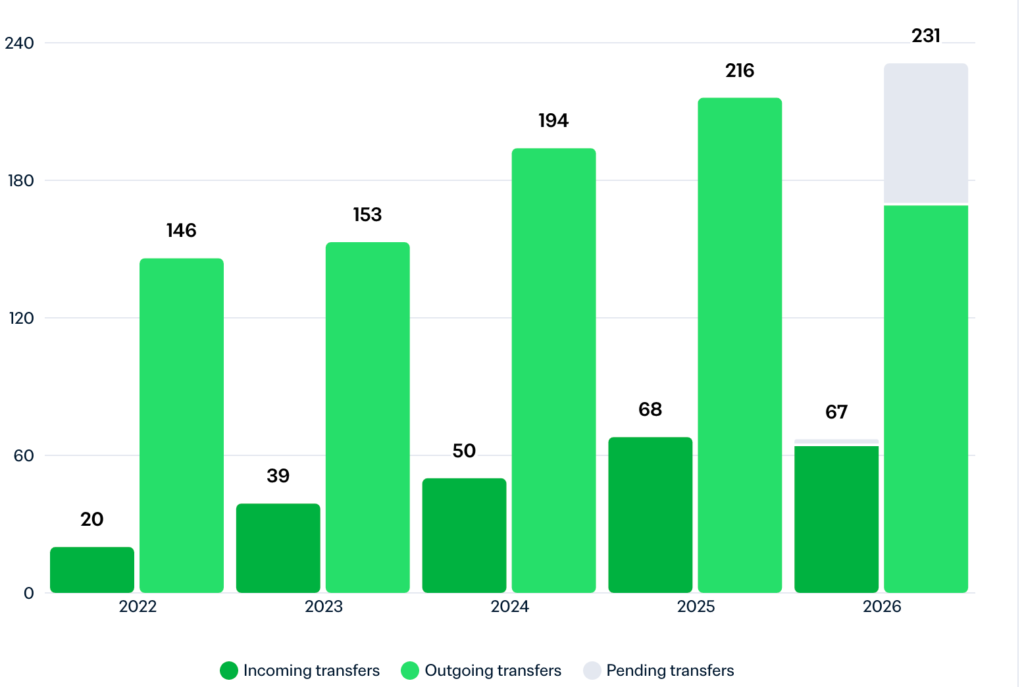
Nigeria earned $9.9m on 231 outgoing transfers while spending $0 on incoming transfers in the mid-year FIFA 2026 transfer window.

Spending on transfer fees reached more than USD 9.8 billion during the mid-year 2026 window, with Nigeria showing a 6.9% growth rate for outgoing and a %1.5 drop for incoming transfers.
The figure is an increase from $7.5m received for 216 outgoing transfers in 2025 and the highest in the last five years.
FIFA 2026 Transfer Window: Nigerian Volume vs Value
Nigeria ranks in the top three in Africa for incoming and outgoing transfers, but compared to the global level, the true value belies the impressive numbers.
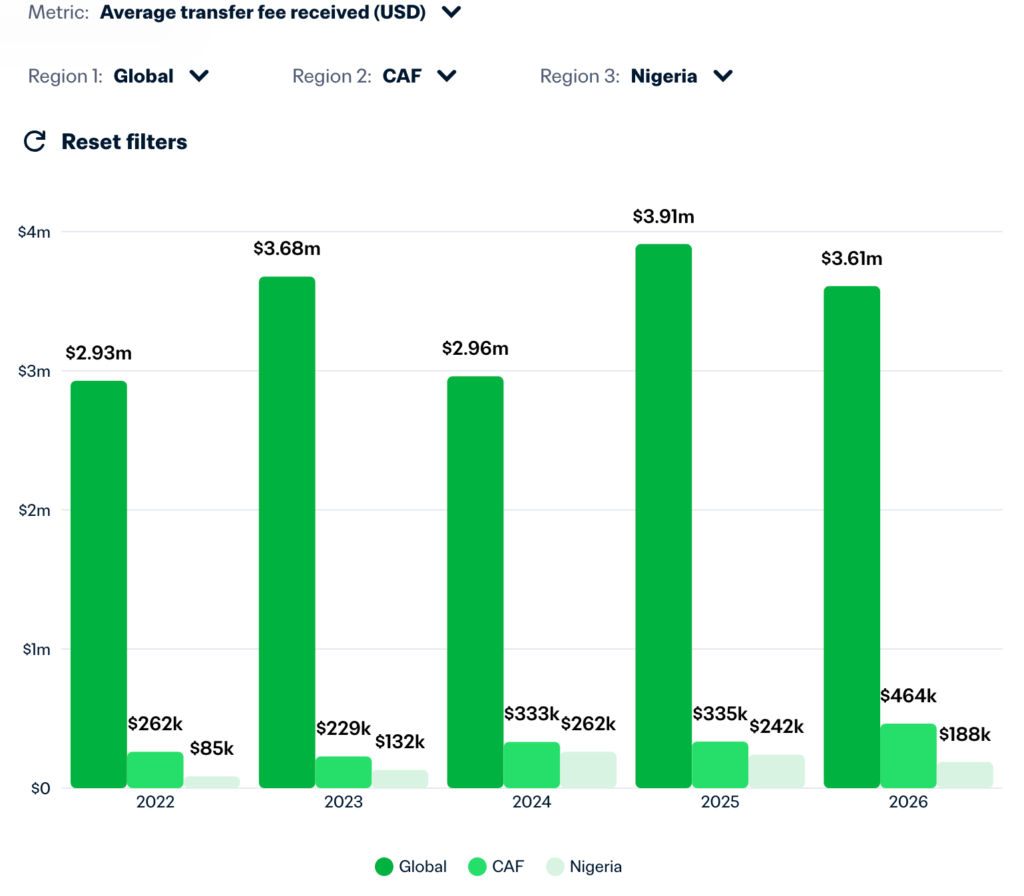
In comparison, the global average for transfer fees received stood at $3.16m, while Nigeria’s average is $188k, a drop from $242k and $262k received in 2025 and 2024, respectively.
The global average age for transfers stands at 24.4 years, with Nigeria well below at 20.2 years, providing insight into why the value is low despite higher outgoing transfers.
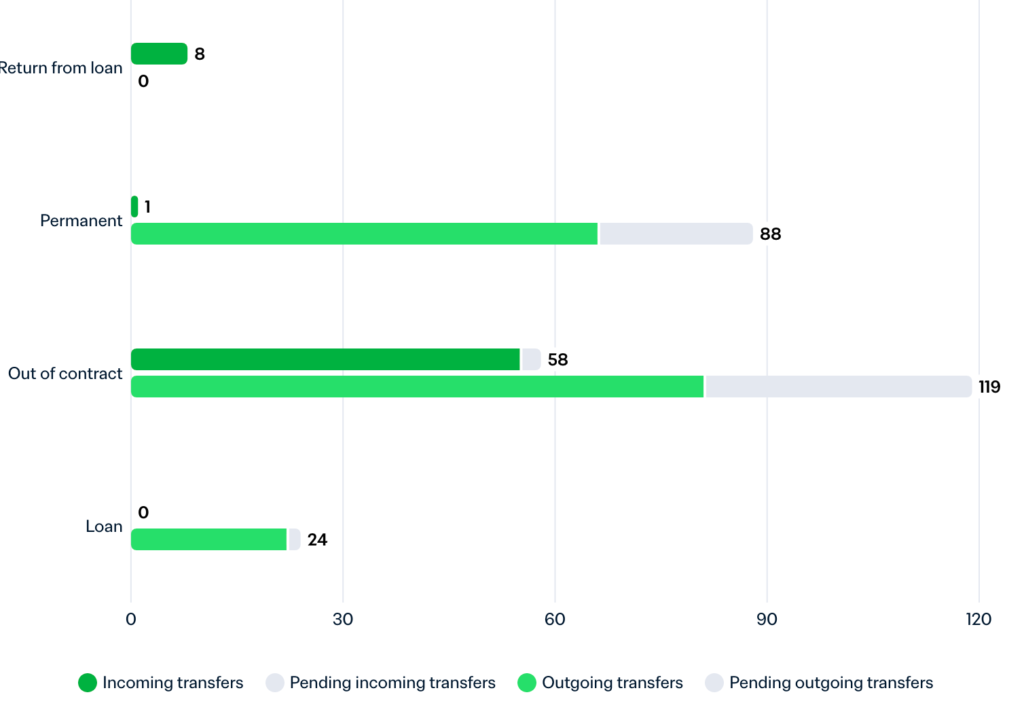
Similarly, a further breakdown shows that only 88 of outgoing transfers were permanent, 119 out-of-contract, and 24 loan transfers.
The $0 Value for Incoming Transfers
An interesting data point shows the country recording $0 for incoming transfers despite having 67 incoming transfers.
Furthermore, the breakdown shows 58 of the 61 incoming transfers were for out-of-contract players, with 3 pending.
Data from the FIFA transfer systems reveals that Clubs agreed to include a transfer fee in 21.8% of all transfers completed during the mid-year window 2026, with the average transfer fee standing in the region of USD $3.61m.
The numbers behind Nigeria’s performance in the mid-year FIFA 2026 transfer window expose a persistent valuation gap that continues to define the imbalance in Nigerian domestic football.
While an average player export age of 20.2 years drives high volume, it yields a meager $188k per transfer, a fraction of the $3.16 million global average, proving that selling young talent without reinvesting capital fails to yield true long-term financial equity.
The $0 spend on incoming transfers depicts why the Nigerian league clubs continue to lack quality talent to compete on the continent.
