


Football skitmaker, Mobike, sent football X formerly Twitter into frenzy, questioning how the NFF spent the FIFA Forward Funds totaling $10m in the last ten years.
The video caught fire as different sports enthusiasts traded accusations on who to fault, or what the public should know.
NFF has finished us!!! What is this wickedness and greed??? 😭😭
PLEASE SAVE NIGERIAN FOOTBALL !!!
@thenffofficial pic.twitter.com/Axd0GH9A6l— The Big Bird🦅⚽️ (@c_mobike) October 23, 2025
Subsequently, the Nigeria Football Federation released a statement trying to counter the allegations, saying so much, yet so little.
The replies led to more call-outs and the birth of the #saveNigeriafootball hashtag on X to unravel how the NFF spent the funds.
The Background.
According to FIFA, the Forward funding, previously named the Goal project, supports football development through investment, impact, and oversight amongst member nations.
FIFA Forward is built to provide 360-degree, tailor-made support for football development in each of its member associations and the six confederations.
Following the successful implementation of two editions of the FIFA Forward Development Program, “FIFA Forward 1.0” and “FIFA Forward 2.0”, “FIFA Forward 3.0” launched in January 2023, providing a more comprehensive funding and support of football development projects across the world than ever before.
How The NFF Spent FIFA Forward Fund
Since 2016, FIFA has budgeted $17.9 million over a two-cycle of four years through the FIFA Forward 2.0 and 3.0, and the NFF has accessed $15,250,000 to cover infrastructure and operational projects.
In a report, FIFA summarized that the NFF has used its funding for infrastructure, strengthened grassroots, and boosted player development, enhancing international competitiveness.

Infrastructure funding breakdown
0. Member Association headquarters
2. Stadium(s)
2. Technical Centre(s)
0. Beach Soccer/Futsal complex(es)
4. Pitch(es).
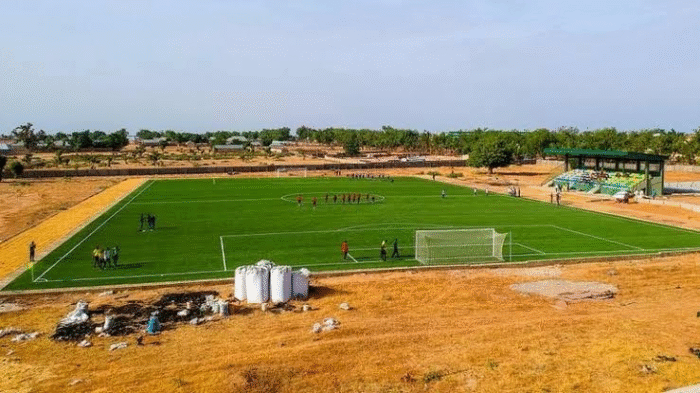
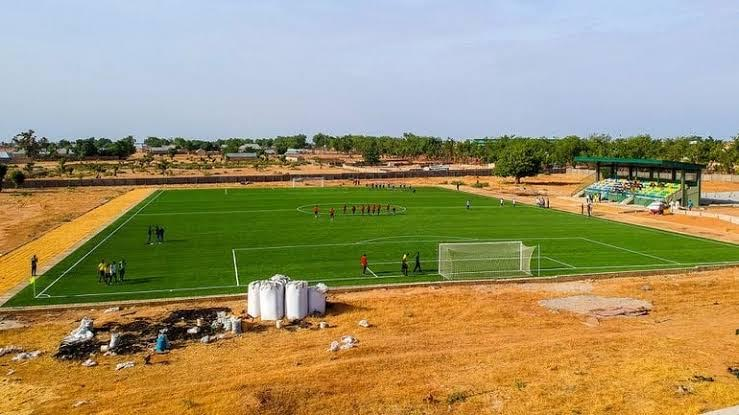
Overall, the NFF has built two technical centers in Abuja and Bauchi, two Stadiums at Kebbi and Ugborodo, Delta(ongoing), and four pitches, with two in Abuja as part of the technical center in Abuja, featuring a players’ hostel and others.
FIFA Forward 2.0: How The NFF Spent The Funds
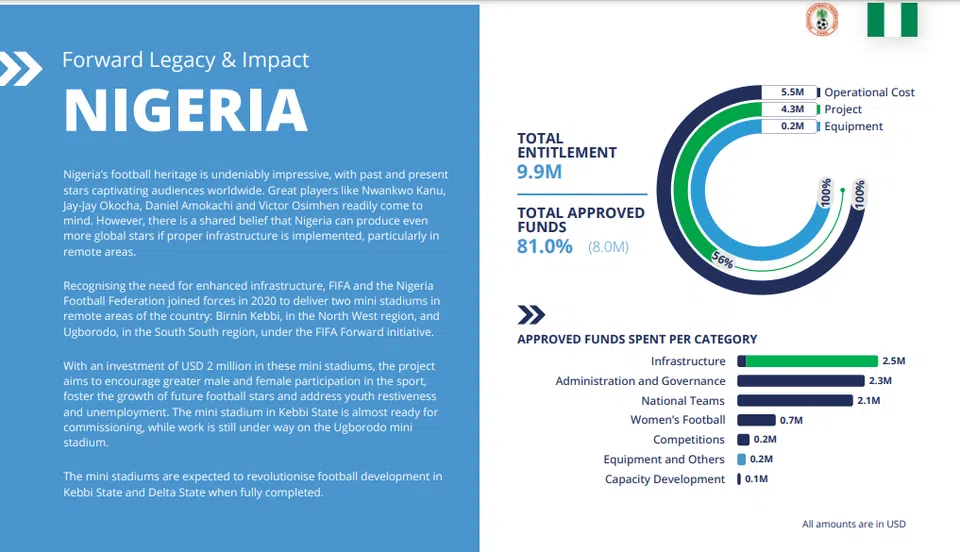
Similarly, in forward 2.0, Nigeria spent $8 million out of the proposed $9.9 million for the period: 2016-2022.
A breakdown shows that operational costs accounted for 55 percent of how the NFF spent the funds. Also, the NFF maxed out its $200,000 allocation for equipment.
However, it could only achieve 56 percent of the $4.3 million allocation for projects.
FIFA Forward 3.0(2023-2026).
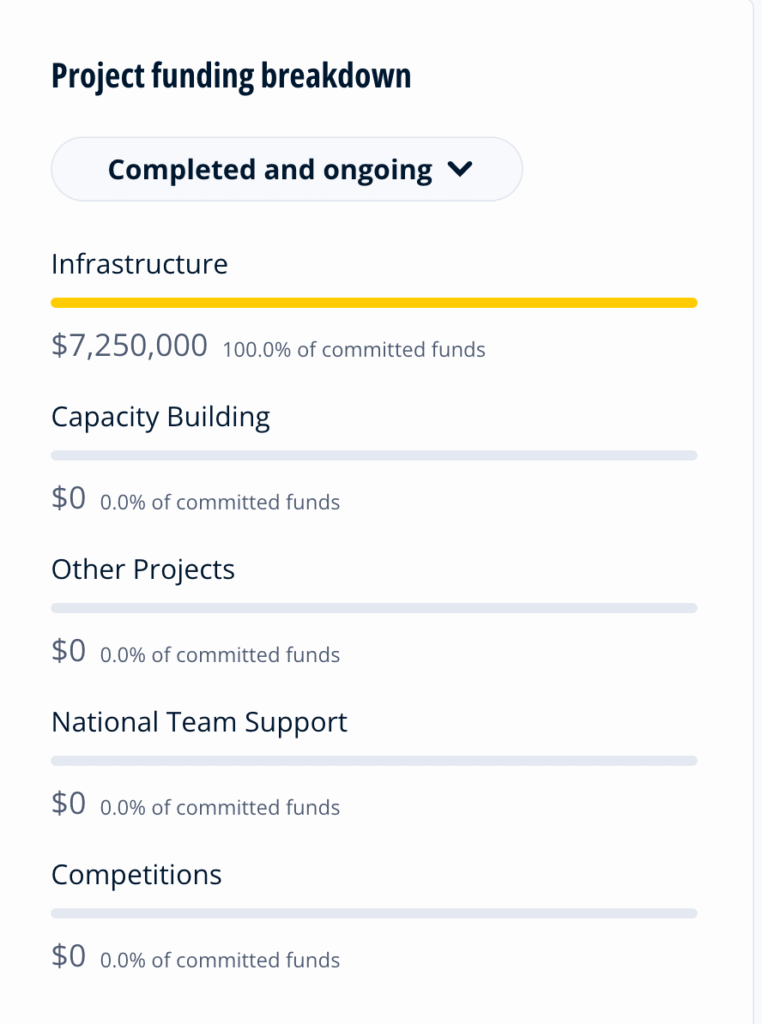
Nigeria has so far used a total of $7,250,00 in 3.0 for completing an ongoing project and not the $10m as speculated.
A new technical center, including players’ accommodation and new pitches, artificial and grass, is in progress.
The new facilities will include a 68-room accommodation block for the players, known as the NFF-FIFA Players Hostel which will include 62 single rooms, four suites and two executive suites plus kitchen, restaurant, sauna, meeting rooms and a banquet hall.
Two new training pitches, one synthetic and one natural grass, alongside the hotel, while an existing synthetic pitch will be revamped. A stand with 1,838 seats will be constructed for spectators, along with two dressing rooms for players and two for officials.
FIFA Forward is providing USD 4,879,570 in funding for the project.
Insights On FIFA Forward Funds Payment
The FIFA general secretariat oversees the proper use of the funds and the audit and control process in accordance with articles 13, 14, and 15 of these regulations.
Subject to compliance with FIFA regulations, the funding granted to each member association under Forward 3.0 includes a contribution of up to USD 8 million for the four‑year cycle (2023‑2026).
The amount represents an increase of USD 2 million compared to the Forward 2.0 cycle and USD 3 million compared to the Forward 1.0 cycle.
Also, under Forward 3.0, each member association will receive: up to USD 5 million over the four‑year cycle (2023‑2026) for operational/running costs; and USD 3 million over the four‑year cycle (2023‑2026) for specific projects.

Meanwhile, Forward funding has made a major contribution to transforming the African football landscape with USD 118.7 million – the largest area of investment – utilized to improve infrastructure.
Furthermore, 144 projects were done and 94 new pitches laid. The growth potential of women’s football on the continent came to the fore with more than 10,000 girls and women benefiting from some of the 36 competitions launched.
